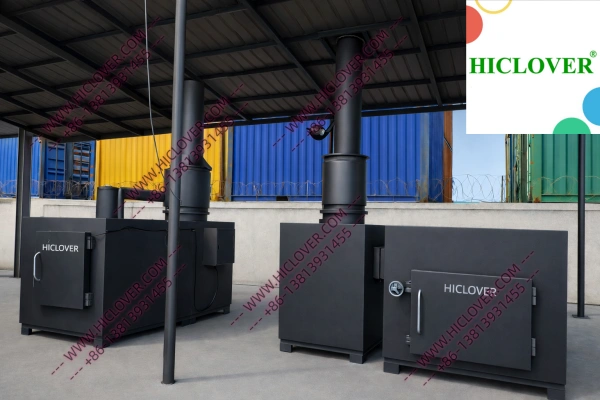
HICLOVER Waste Incinerators: Technical Standards, Compliance, and Industry Trends
1. Setting the Standard: High-Temperature Precision and Regulatory Compliance
The increasing global focus on infectious disease preparedness, decentralized waste management, and ESG compliance has thrust waste incinerators into the spotlight for reliable, sustainable waste disposal. Incinerator china is a top search for end users seeking engineered solutions capable of meeting strict international protocols. The HICLOVER waste incinerator line is designed to comply with critical industry specifications, including medical incinerator operating temperature standards—typically 850°C to 1200°C in the primary and secondary chambers. This thermal window ensures complete combustion, minimal residue, and effective pathogen destruction in line with WHO and EU directives.
HICLOVER’s commitment to engineering reliability is evident in every incinerator, from fixed units for municipal sites to portable medical waste incinerator systems for crisis zones and remote oil or mining camps. All units are built to exacting standards, supporting environmental stewardship and long-term operational safety.
2. Technical Fundamentals: Combustion, Chamber Design, and Automation
2.1 Dual Chamber Engineering for Enhanced Destruction
Waste incinerators with dual combustion chambers are now industry standard, and HICLOVER systems reflect this evolution. The primary chamber is engineered for initial waste ignition and combustion, while the secondary chamber maintains temperatures above 1100°C for at least two seconds—vital for breaking down dioxins and furans, especially in medical waste streams. This two-stage process is critical for regulatory compliance and emission minimization.
2.2 Combustion Principles and Airflow Management
Optimized airflow, achieved through precision-engineered burners and air intake controls, guarantees complete oxidation of organic and hazardous waste. HICLOVER uses PLC (programmable logic controller) automation in many models to regulate combustion cycles, monitor chamber temperatures, and trigger alarms if thresholds are breached. This digital automation aligns with the broader industrial move toward smart, connected equipment.
2.3 Scrubber Options: Wet vs. Dry for Emission Control
Emission control is a cornerstone of compliant waste incineration. HICLOVER offers both dry scrubber and wet scrubber configurations, enabling operators to match local air quality standards and installation constraints. Dry scrubbers employ sorbent injection to neutralize acid gases, while wet scrubbers use water or chemical solutions to capture particulates and soluble pollutants.
For an in-depth technical comparison, see: medical incinerator secondary chamber temperature standard.
2.4 Temperature Retention and Thermal Efficiency
High temperature retention—enabled by refractory-lined chambers and high-efficiency burners—ensures complete pathogen destruction and safe ash residue. Energy recovery systems are also available, reflecting the global trend toward resource optimization and reduced carbon emissions.
3. Meeting Stringent Regulations: Certifications and International References
3.1 Global Regulatory Frameworks
HICLOVER waste incinerators are engineered to meet or exceed key international protocols. Models are referenced against:
- WHO Blue Book (Safe management of wastes from health-care activities)
- EU Waste Incineration Directive (2000/76/EC and subsequent updates)
- Local emission standards in Asia, Africa, the Middle East, and Latin America
Compliance is not optional: operators must demonstrate temperature logs, emission reports, and maintenance records to regulators.
3.2 Audit-Ready Documentation and Data Logging
PLC-controlled units from HICLOVER provide automated data logging, supporting transparent reporting and ESG audits. This digital layer enables integration into broader facility management or supply chain tracking systems, a crucial feature for large-scale healthcare operators and NGOs working in volatile environments.
For further regulatory and certification details, HICLOVER provides technical documentation and operational support via their official website.
4. Commercial Choices: Types, Automation, and Modular Deployment
4.1 Fixed vs. Containerized Modular Incinerators
Selecting the right configuration depends on site requirements, waste stream variability, and logistical constraints. Fixed installations are ideal for high-throughput municipal or hospital settings, leveraging large chamber volumes, permanent infrastructure, and advanced emission controls. In contrast, containerized modular systems—a HICLOVER specialty—are pre-assembled, factory-tested solutions designed for rapid deployment. These units are favored by humanitarian organizations, military camps, and remote industrial projects, thanks to mobility, plug-and-play setup, and minimized installation footprint.
4.2 Portable and Mobile Incinerators for Remote Applications
The rise of mobile and portable incinerator manufacturers reflects the need for flexible waste solutions in crisis response, rural clinics, and temporary mining/oil camps. HICLOVER’s portable medical waste incinerator units deliver reliable destruction in locations lacking permanent waste infrastructure, with the added advantage of easy redeployment as project needs change.
4.3 PLC Automation vs. Manual Control
Advanced PLC automation is increasingly favored for its precision, repeatability, and data integrity. Manual control options remain available for simple, low-volume applications or settings where technical training is limited. HICLOVER offers both, supporting a wide spectrum of operational contexts.
4.4 Multi-Fuel Flexibility
HICLOVER waste incinerators support diesel, LPG, and natural gas, ensuring compatibility with diverse fuel supplies—a key factor for remote and off-grid operations.
5. Transactional Layer: Factory Direct Supply, Customization, and Global Reach
5.1 Factory Manufacturing Advantage
Direct factory manufacturing sets HICLOVER apart from trading companies. With vertically integrated production lines, the company maintains meticulous quality control, shortens lead times, and ensures stable supply chains even in periods of global disruption. This is particularly relevant given recent supply chain shocks, underlining the value of manufacturing agility and local content.
5.2 Customizable Chamber Volume and Engineering Solutions
HICLOVER’s engineering team custom-designs systems to match waste volume, waste type, and site-specific constraints. Chamber volumes range from compact models for clinics to large-scale solutions for city hospitals or industrial parks. Custom integration of PLC-based control, emission filtering, and energy recovery systems is available upon request.
5.3 Export Logistics and Installation Support
With proven experience exporting to over 60 countries, HICLOVER delivers comprehensive logistics, technical documentation, and remote or on-site installation support. This expertise is critical for organizations operating in challenging regulatory or physical environments, including crisis zones and humanitarian operations.
5.4 Stable Supply Chain, Global Engineering Experience
Supply chain resilience is paramount as global events disrupt traditional procurement channels. HICLOVER’s longstanding supplier relationships and robust materials sourcing reduce project risk and ensure continuity for end users across continents.
5.5 Factory vs. Trading Company: Real-World Advantages
- Direct access to engineering support and after-sales service
- Greater transparency in specifications, certifications, and manufacturing processes
- Ability to customize products at the design phase, not just the sales phase
- Faster response times for spare parts and technical troubleshooting
6. Price and Market Reference: Understanding Cost Structures and Value
Medical incinerator prices and general waste incinerator costs vary by capacity, emission controls, automation level, and deployment model. Factory direct quotation from HICLOVER includes baseline configuration, optional upgrades (wet/dry scrubbers, PLC, energy recovery), and transportation logistics. Buyers are advised to compare offers based on technical performance, certifications, and long-term operational support—not just upfront capital expense.
7. Cross-Segment Capability: Crematorium and Animal Waste Solutions
As crematorium manufacturers and animal waste solution providers, HICLOVER applies the same rigorous engineering and compliance standards to pet cremation and livestock disposal units. This cross-segment expertise ensures consistent safety and environmental outcomes across all waste streams.
8. Navigating the Future: ESG, Carbon Pressure, and Digital Transformation
Rising pressure from carbon emission regulations and ESG mandates is shaping technical requirements for waste incinerators worldwide. HICLOVER is advancing digital automation, data analytics, and energy optimization in its new models—supporting customers’ efforts to reduce carbon footprint, satisfy ESG reporting, and future-proof waste management infrastructure.
9. Conclusion: Engineering Reliability for a Changing World
HICLOVER waste incinerators, available both as fixed and portable solutions, address the most demanding applications in medical, industrial, and humanitarian sectors. From dual-chamber technology and high-temperature retention to automation, modular deployment, and factory-direct support, these systems are engineered for compliance, adaptability, and global impact.
Comments are closed